
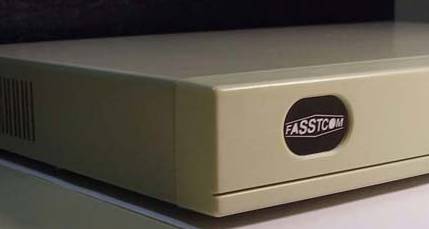
The following description and pictures of the Fasstcom hardware come from Mark Pickersgill. Mark was a user of the Fasstcom system in Australia, who then worked for Fasstcom in Quebec. One of the things Mark did was develop a very complete terminal emulator for talking to Wang and Fasstcom machines. The screen grabs below come from his program.
Some time after Wang declared bankruptcy in 1992, probably 1994 or so, a former Wang engineer, Marc DeGagne, negotiated right to use some of Wang's technology, and founded (or co-founded) Fasstcom Computers, in Quebec, Canada.
Fasstcom sold hardware and software similar to the CS/386, that is, a reimplementation of BASIC-2 running on a conventional 32b microprocessor. Their enhanced software and operating system was called "FICE", and also developed a platform on top of FICE for developing database applications called "FICE+". FICE could support up to 255 users simultaneously.
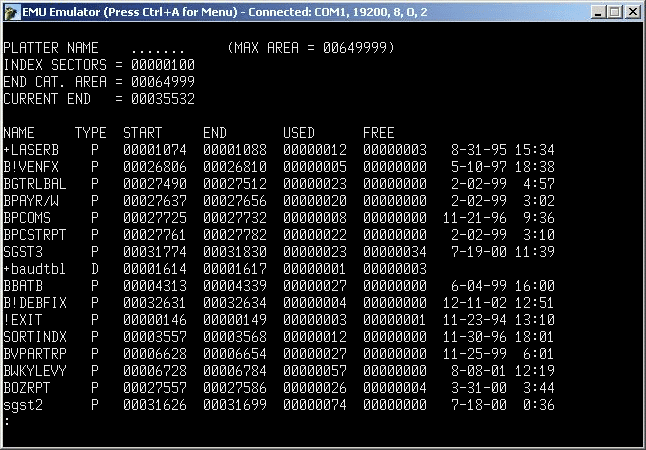
Here are some screen captures of the FICE system in action:
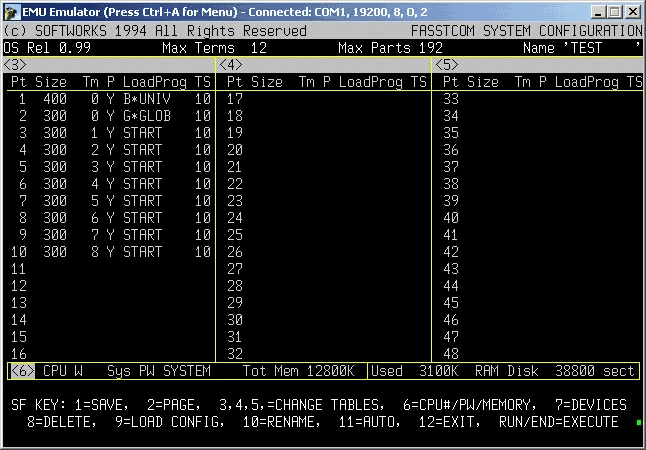
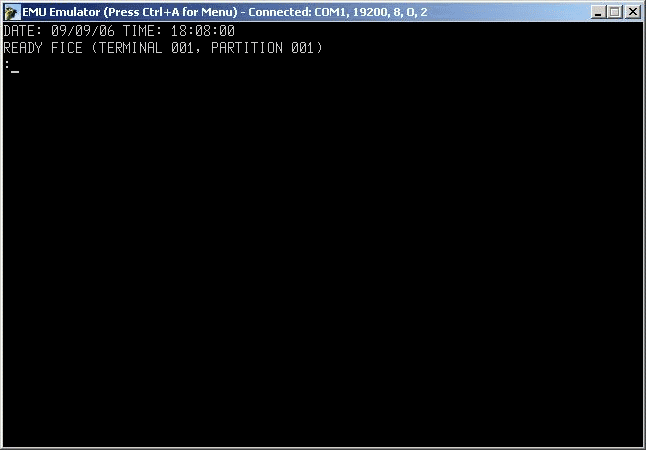
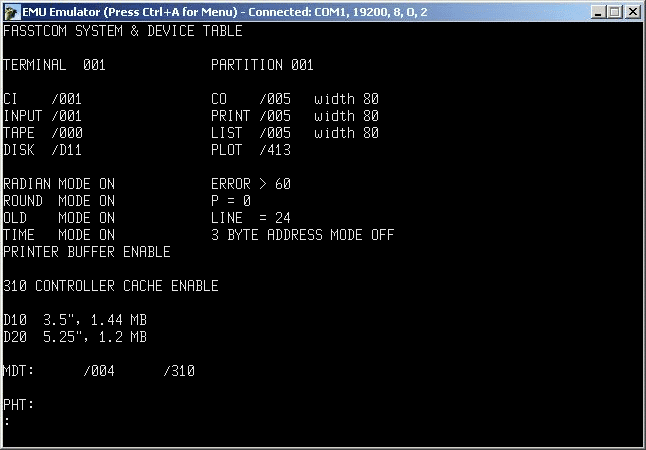
Fasstcom was built on the idea that where Wang went wrong was that it was beholden to its legacy of custom hardware, and the implicit assumption that margins would be high enough on a relatively low volume product to justify the expense. The CS/386 addressed some of this problem, but it still was tied to legacy I/O options.
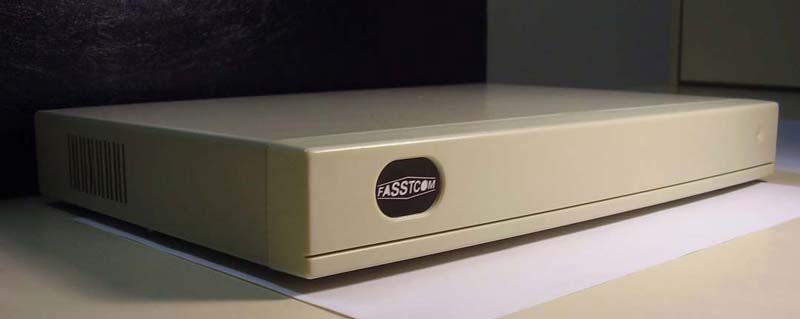
In contrast, Fasstcom used a passive backplane that had standard PC ISA and PCI slots. The case was rugged, but the construction was more cost effective like that of a standard PC. The main CPU was either an Intel 486 or Pentium CPU; this sat on a large card that plugged into the backplane. The system DRAM was situated on the x86 card.
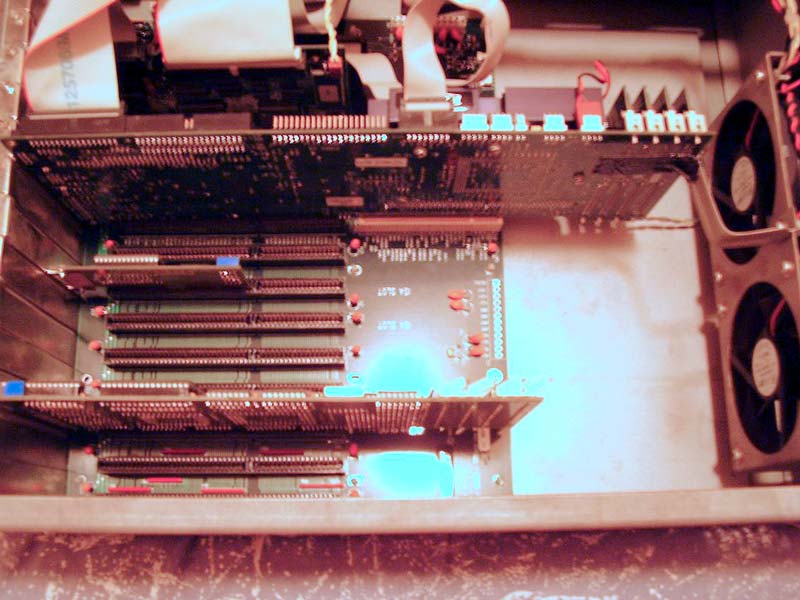
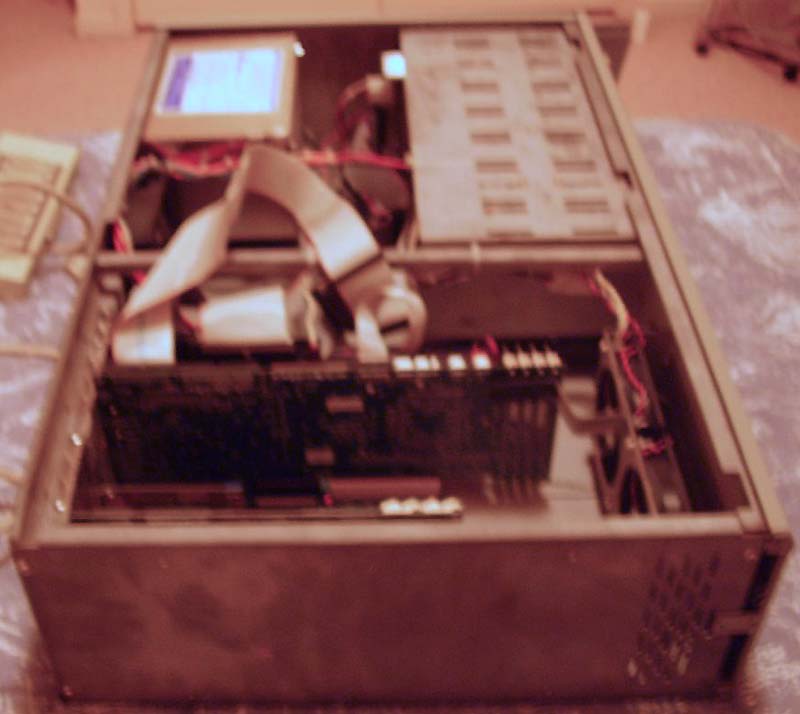
The hardware was standard enough that Mark Pickersgill has his system set up by plugging the i960 I/O card, the SCSI disk controller, and the boot ROM card into a stock Pentium-100 motherboard.
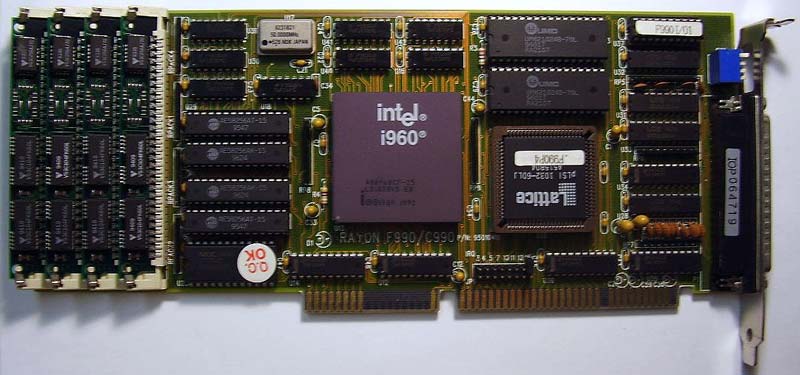
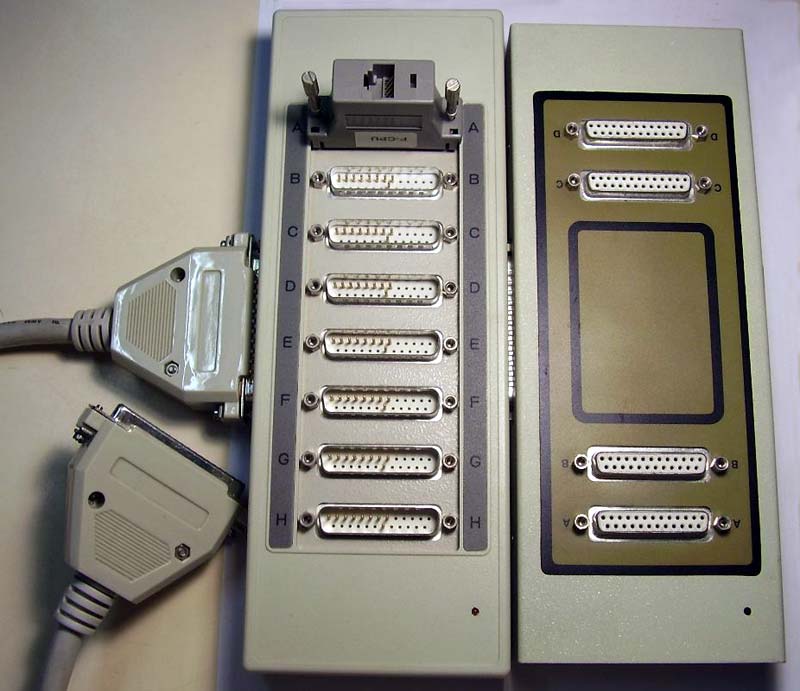
Terminal and printer I/O was handled by a card containing a 25 MHz Intel i960 CPU and a megabyte of memory. This card functioned much in the same way that the terminal MUX cards did on the Wang systems. A thick coax cable connected from this card to breakout boxes containing many RS-232 DB25 connections. The terminal protocol was backwards compatible with standard Wang terminals, but also supported some enhancements when a Fasstcom terminal was attached instead. The Fasstcom terminal used a standard VGA monitor for display, and a stock PC keyboard.

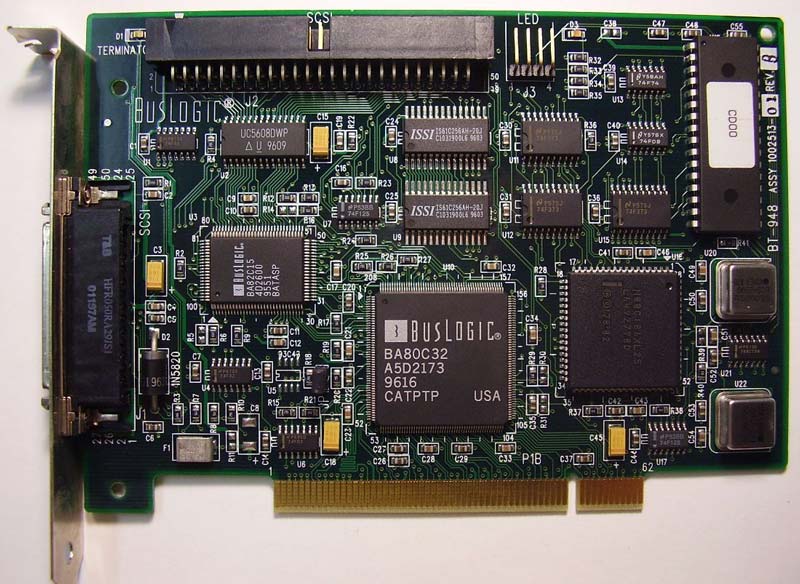
Disk I/O was performed via a SCSI-II controller card. By using cheap off the shelf components to build the system, Fasstcom benefited had a lower cost structure and had many more modern options to pick from. Fasstcom used the forward looking (and unfortunately unreliable) magneto optical 230 MB disk cartridges for disk backup, also sitting on the SCSI chain.
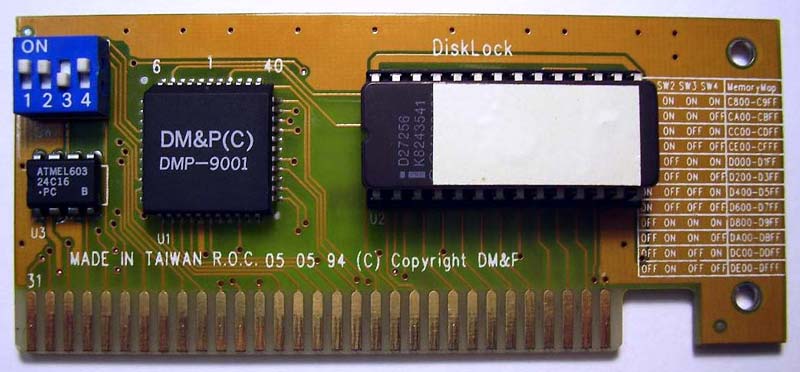
The system employed a small boot card that contained both the boot code and configuration information so that the user could only run as many terminals/users as what Fasstcom sold them (no customer field upgrades).
Like the CS/386, the BASIC-2 interpreter ran on the x86 processor. Since Fasstcom used a CPU one or two generations after that used by the CS/386, the speed of the BASIC was that much faster.
As the market for 2200 machines died out, with users transferring to either KCML or NPL running on standard hardware, or converting wholesale to more popular systems at the price of porting applications, Fasstcom eventually closed up too, around early 2002.
Mark Pickersgill was a user and developer of software for the Fasstcom machines. He has generously provided the source and executable for his terminal emulation program, which implements the Wang terminal protocol. It is specific to Windows32, however. Note in LICENSE.TXT that the software is © Mark Pickersgill.
There was also an older Wang 2200 terminal emulation program, called WT2, which ran under DOS. Mark describes it (manual here):
WT was a WANG 2200 Terminal Emulation program for DOS to emulate the WANG 2200 Terminal. It came on a 5.25" floppy disk drive.
From what I can tell it was written by MacSoft in California (incorporated 8th of May, 1986, suspended 1st November, 2006) and possibly licensed to an Australian company, Business Computer Services Pty Ltd, perhaps for redistribution.
WT2 extended some of the screen drawing commands (HEX(02)) to be able to send data directly to a PC file. There are a couple of demo programs that come with WT2 to show some of its extra features.
Some quotes from the document that I like: Page 10: Such speed -> "19,200 baud may be set for any kind of PC, however some IBM PCs may have timing problems when running this fast."
Page 60: Homage to WANG -> "After writing this terminal emulation package we have a lot of respect for the engineers at Wang. The Wang 2200 is a solid little mini-computer that is extremely fast and reliable, and takes advantage of local intelligence whenever possible. Imagine writing a complicated operating system and feeling confident enough to put large chunks of it burned into PROMs."
Mark also was kind and scanned some Fasstcom manuals and notes:
- FS Series Computer System Operation Manual
- Fasstcom Terminal Manual
- FICE+, a library of useful routines for Fasstcom systems
- FICE Tips, Mark's personal colletion of tips and tricks